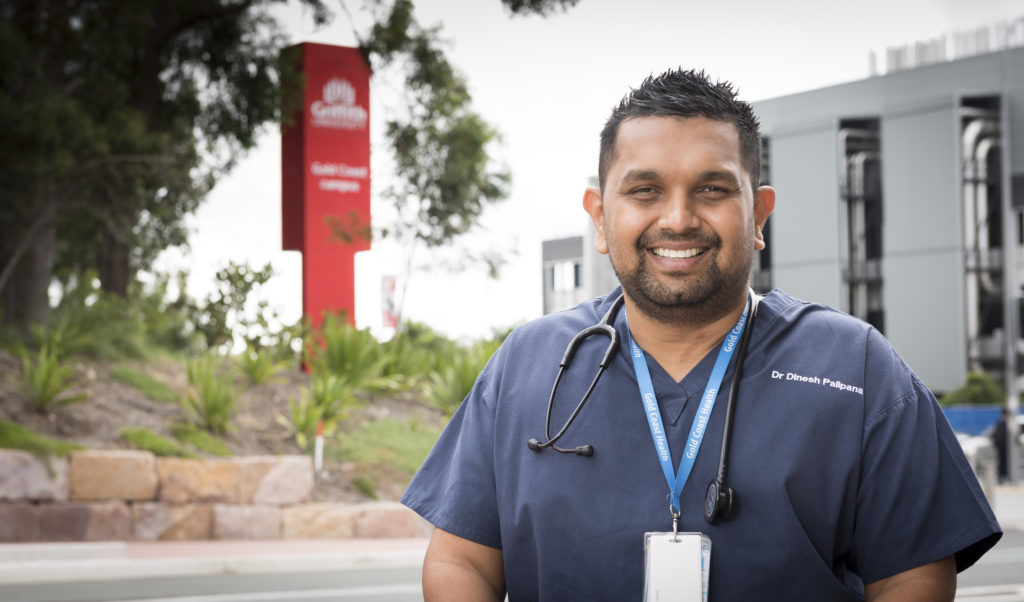
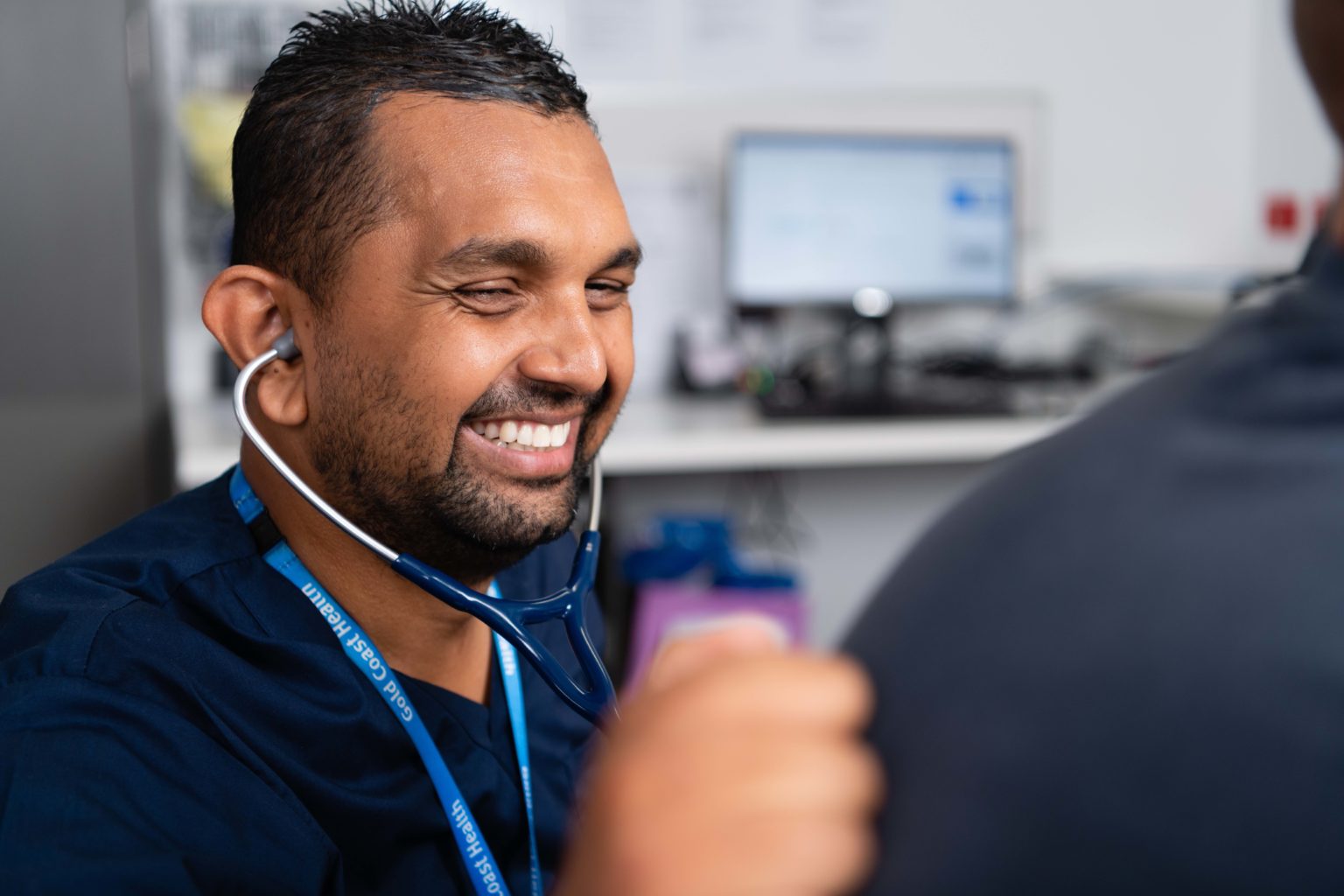
Dr Dinesh Palipana, PDA’s Ambassador and resident medico, has just had one of his works published by Emergency Medicine Australasia.
COVID‐19 and spinal cord injuries: the viewpoint from an emergency department resident with quadriplegia
You can read it here
https://onlinelibrary.wiley.com/doi/10.1111/1742-6723.13525
Written by Andrew Fairbairn, PDA Director
Let’s talk about PERCEPTION.
I Work for an organization called Limbs 4 Life as a Project Coordinator.
One afternoon I was driving home from a meeting about 15 kms from my house. Most of that journey there are roadworks being done. It is normally an 80 km/h speed limit, but because of the roadworks, it was down to 40 km/h.
As I was cruising along at 40km/h, I happened to glance over and noticed new looking white Toyota Prado with a roof basket and side awning, you know, your usual 4wd set up, parked on the side of the road with another car in front. Not unusual you may say, and you would be correct, BUT, as I got closer, I noticed that said Prado, had some other, hidden additions. It had blue and red lights flashing in the front grille and also in the rear windows. It was an unmarked WA Police car. Now my perception of the vehicle had totally changed.
What you perceive is very much guided by how you think and can be defined by your recognition and interpretation of a sensory input. For an example, if at a set of traffic lights, you have a green light, you perceive, through your sense of sight, that it is ok for you to proceed.
What does it mean for those of us with physical disabilities? We may need to have additions made to the “normal” for us to be able to process that sensory input. Things like flashing lights, sounds, alarms etc. will assist hard of hearing and vision impaired people. For people with mobility issues, obvious things such as ramps and rails assist when we are navigating the community.
BUT………perception goes both ways. What able body people perceive good for us, doesn’t necessarily equate to what works for us. We, as a community of physically disabled people, need to be in the forefront of planners and designers’ thoughts and minds when they are building anything in the community. You can do this by getting involved in your Local Government Area Disability Action and Inclusion Group. You can have input through State and Federal Government Planning Groups, such as those that are put together when they build new sports stadiums, shopping centers and recreational facilities.
The more you go out in your community and exercise your right of place to that community, people’s perceptions will change, and they will see you as valued and important.
Lastly, don’t let other people’s perception of you, or our community, be the thing that stifles you. You are unique, and you bring to the table a wealth of perception and experience that only you can have.
Membership is FREE and lends PDA your voice to work towards making real change to the physically disabled community.
We have some exciting things going on behind the scenes that we will reveal very soon, but in order to make the greatest impact we need your help and want you to be part of our journey.
Click on the link (pda.org.au/membership/) and fill in your details.
Couldn’t be easier…
…and you will go in to the draw to win a $50 Coles gift cards.
If you’re already a member and want to go in a members’ draw for a $50 Coles gift card, follow the same link and update your details.
We have 14 $50 Coles gift cards to give away – one per state/territory for new members and one per state/territory for existing members who update their information.
This campaign will run until close of business AEST on Friday 7th February 2020, with winners drawn at random as per the groups outlined above.
Winners will be contacted by PDA on Monday 10th February 2020 and announced on our Facebook and Instagram pages.
Sign up and together let’s make our voices louder.
As a doctor with a spinal cord injury, I’ve had the opportunity to gain a unique insight into healthcare delivery for people with disabilities. Physical access is often an issue, even in big hospitals.1 Flexibility is necessary, considering the unpredictable impact on time because of a different lifestyle. However, my most striking experiences have been in the diagnosis of sometimes life-threatening conditions.
With a spinal cord injury for example, patients mightn’t give a classical story for common conditions because of differences in sensation.2 For the same reason, physical examinations may not turn up anything useful for the doctor.3
I once woke up with chest pain, breathlessness, sweating and palpitations. It didn’t get better. Over time, this was reviewed by a few different doctors but was eventually put down to anxiety. I became frustrated and listened with my own stethoscope. I could hear some sounds in the lungs suggestive of a few different problems, but no one heard me out. Eventually, I started losing consciousness every day. Then, someone took notice. We eventually found a significant amount of fluid around one lung. The issue took weeks to identify. I ended up in an intensive care unit.
Another time, I was a patient in an overseas emergency department that wasn’t aware of autonomic dysreflexia – a potentially fatal complication of a spinal cord injury. I knew what was happening then, but no one listened. I thought that the end was near that day. Fortunately, we knew a doctor who turned up and handled the situation in the eleventh hour. In contrast, I’ve been under the care of an open-minded local emergency department who listened and identified the problem quickly.
This state of affairs is no one’s fault. In medical school, doctors are required to learn about a thousand and one different things. While specialty training as a doctor, the focus becomes even more narrow. There is just no time to cover the long-term intricacies of conditions like a spinal cord injury.
General practitioners are the frontline in Australian health care. They are the first that can see the hint of a problem. A proactive approach prevents problems at the gates, but this requires an understanding of what to look for in this unique population. Even in the early 1900s, people with spinal cord injuries for example lived very short lives because of complications. It was often a death sentence. In some parts of the world, this is still the case. But, we have the resources to ensure that our population can live a healthy and productive life comparable to those without similar injuries. Today, medicine can do that.
I must note too that we often see people in the hospital with questionable treatment given to them by their daily caregivers. Caregivers are an invaluable part of society but as with everything, some reckless ones still pervade what is perhaps one of the most precious relationships. More than once, I have seen needless injuries and negligent care. I even had a personal interaction with a caregiver who laughed about dropping their helpless client.
I’m fortunate to be in a position to have some understanding of the life experience in someone with a disability who presents for healthcare. I remember one night when a patient said, “I’m so glad that you came into this room as my doctor, because I knew that you’d understand”. I’ve also been lucky enough to have the background to adequately direct my own health care. I wonder though, what about the thousands that are voiceless?
It’s never productive to just talk about problems. What are the solutions? I can think of two immediate things.
One, is education. I’ve been involved with developing education initiatives on spinal cord injury for general practitioners. The goal is to have some upskilled general practitioners in this area that people can access for care. It’s that simple. Upskilling general practitioners to have a special interest in various disabilities is important. Thoughtful care in the community can reduce hospitalisation and resource use; and save lives.4 However, it will be up to us – the community – to drive these initiatives. No one else has a vested interest to do so.
Two, is having more people with disabilities in the health professions. I faced more than one challenge in becoming a doctor with a spinal cord injury. I once talked to a student in a wheelchair who wanted to study speech pathology, but was told that they couldn’t. These stories are not isolated. The health professions have ironically been resistant to include the very people that they treat. We are now starting to make headway in medicine. Other professions must come into line too. What better way to change healthcare for better than to include lived experiences?
Australia is leading the way in social changes for an inclusive society. We have an opportunity to create an inclusive healthcare system as well.5 We’ve seen the horrors of areas like aged care exposed in Royal Commissions. We don’t need to wait for the same in disability and healthcare. With a grassroots effort from us all, we can make it happen.
References:
1. Guilcher S, Munce S, Couris C, Fung K, Craven B, Verrier M et al. Health care utilization in non-traumatic and traumatic spinal cord injury: a population-based study. Spinal Cord. 2009;48(1):45-50.
2. Strauther G, Longo W, Virgo K, Johnson F. Appendicitis in patients with previous spinal cord injury. The American Journal of Surgery. 1999;178(5):403-405.
3. Ingram R, Suman R, Freeman P. Lower limb fractures in the chronic spinal cord injured patient. Spinal Cord. 1989;27(2):133-139.
4. Guilcher S, Craven B, Calzavara A, McColl M, Jaglal S. Is the emergency department an appropriate substitute for primary care for persons with traumatic spinal cord injury?. Spinal Cord. 2012;51(3):202-208.
5. Donnelly C, McColl M, Charlifue S, Glass C, O’Brien P, Savic G et al. Utilization, access and satisfaction with primary care among people with spinal cord injuries: a comparison of three countries. Spinal Cord. 2006;45(1):25-36.
Thank you Minister Fyles, Minister for Disabilities and good evening everyone,
I would like to acknowledge that this function is being held on the land of the Larrakia People, and pay my respect to elders’ past, present and emerging.
I would like to acknowledge people with a disability and their families on International Day of People with a Disability.
The United Nations sanctioned the 3rd of December as a global day of observance 27 years ago – I like some of you in the room may even remember the first celebration and been part of the reforms and milestones ever since.
The day seeks to increase awareness and inclusion of people with disability in every aspect of political, social, economic and cultural life.
This year’s theme, The future is accessible, this resonates for me personally and professionally.
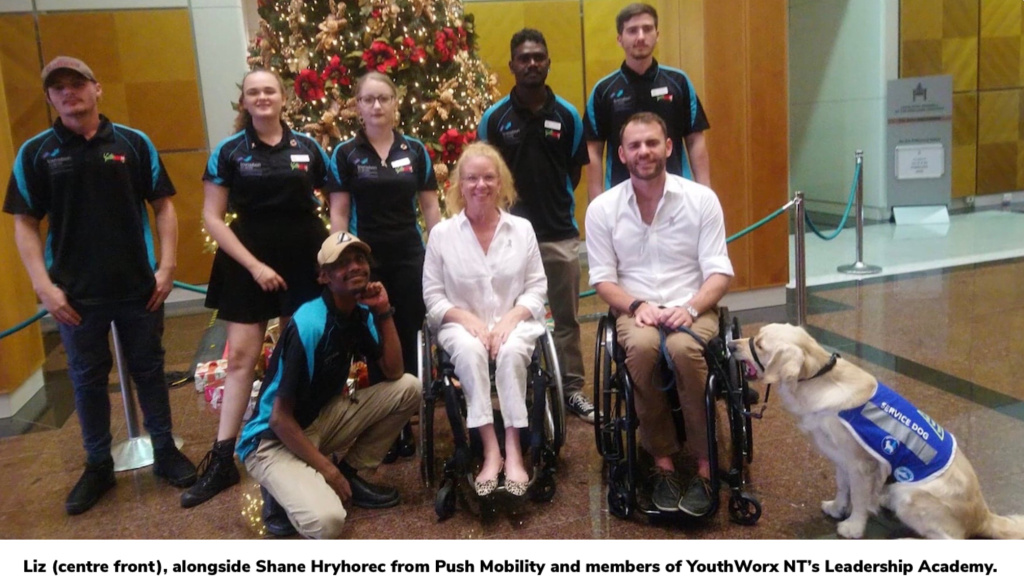
My name is Liz Reid and I’m the Executive Officer for YouthWorX NT. For those who don’t know me I was born with a rare physical disability and remade from the waist down.
My education journey started at a special school; my parents back then were social inclusion pioneers, I was mainstreamed into the school in my local suburb, with the kids in my street.
I was immersed into everything the average kid would do and disability was never part of the equation. It hasn’t always been easy and requires careful planning and lots of creativity.
It wasn’t until last year that I fully embraced my disability and I became a self-managed NDIS participant – this has been huge for my family and I as I hadn’t been disabled enough for any supports before, a cost that we as a family just did because it was necessary.
The investment in Australians with a disability by governments through the NDIS, is the biggest social reform that can’t be underestimated regarding personal value and social worth. Yes, there have been pain points but it’s getting so much better and more to do. Fun fact – the NDIS conversation has been going on since 1975.
I’m fortunate to be able to blend my work with my passion for the disability community. Privilege to represent Territorians with a disability on local networks like the Darwin City Access and Inclusion Advisory Committee, national Disability Representative Organisations and the NDIA Independent Advisory Council, so our voices are heard, and they matter.
Professionally I’ve spent most of my career in education, training and employment with the view that everyone has got the ability to succeed and follow their aspiration and dreams.
For some how they get there might be a little different. I’m a big believer that we need to raise the awareness of people of all abilities and celebrate achievements with the wider community to think and act inclusively, in all aspects of life.
This year YouthWorX NT celebrated 21 years of proudly supporting Territorians to be the best they can be through a range of diverse programs. We have been actively involved with the NDIS since 2011 watching it develop, grow and to find the sweet spot for our organisation to meaningfully contribute to the lives of young people with a disability.
YouthWorX NT was recently awarded a grant from the NDIA’s Information, Linkages and Capacity Building fund to deliver Career Launchpad service. This service provides specialised career coaching and vocational support for young people with disabilities in mainstream school to the world work. The aim is for young people is to enhance in their personal, social and practical employability skills with the ultimate goal of sustainable employment.
Its beautiful the effect this program has on the young people, one young man, who was disengaging and at risk of leaving year 11, now after being part of Career Launchpad and having ongoing coaching sessions, has reengaged and now with the goal of focusing on school, finishing year 12 and a career in the aviation industry.
Career Launchpad has provided an opportunity for young people with a disability to participate in workshops such as Launchpad, vision boards and resume writing alongside young people from our other programs, all while building confidence. Young people don’t see difference, disability is not part of the equation.
I wish to recognise our program partners, Department of Education’s Transition from School Team. APM, NDIA and the skills and talent of the YouthWorX NT team, that believes – Connecting Territorians with opportunities to realise their dreams, goals and potential is paramount to live an ordinary life.
I would like to make a special mention and thanks to the YouthWorX NT Leadership Academy for attending. These young people have made commitment to be the youth voice of our service to represent all young Territorians on matters of diversity, and inclusion.
Thanks to all who everyday promote the participation of persons with disabilities and their leadership in our community.
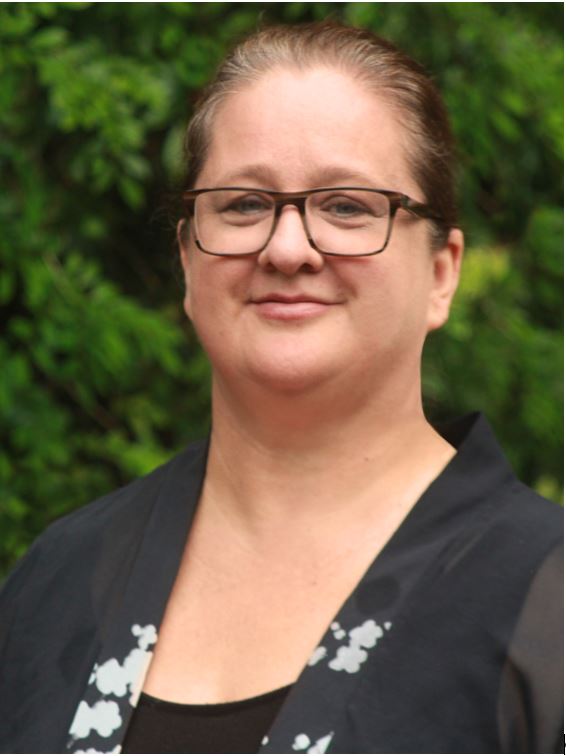
My name’s Natasha Nobay and I’m proud to have joined the team here at Physical Disability Australia (PDA) as the new Promotion Officer.
I look forward to building on the great work that PDA has done over the past 21 years, to ensure that every Australian living with physical disability is able to reach their full potential.
Did you know that, depending upon the supplier, an individual could end up with just $15 out of $45 allocated to them through the NDIS? Tackling this is a central role of our organisation and self-management plans are something that we encourage you to explore. If you are interested in hearing more, please get in touch with us.
We’re also looking to host a series of webinars that focus on areas that you feel are worth covering: areas such as NDIS self-management, disability-friendly holidays and any other issues suggested by you that you’d like us to feature. All members are invited to register for these special online seminars. If you’re not already a Member you’re welcome too, but we encourage you to sign up, as membership is completely free.
For those unable to take part on the day, we’ll also put these webinars up on our website, for later viewing.
Going forward, I’ll ensure the PDA website is regularly updated, to keep all
interested parties informed of relevant developments. I will also be posting news, articles and information on our Facebook and Twittter accounts.
As well as our online channels, we’re working to build a sense of real-world community, by creating opportunities for social get-togethers. We plan to organise regional events to bring our members together, creating friendships and a community that can enrich our members’ daily lives. We look forward to telling you about these events in the near future. Make sure that you sign up for Membership, so we can keep you updated. Membership of PDA is totally free, and gives you the opportunity to get involved and be a part of a voice that works to improve lives for those with physical disabilities. Whether you’re personally affected by disability, care for someone who is, or you just want to be part of our PDA community, please join us by clicking this link and completing the form.
Finally, the more Members we have, the more positive impact we can make. We currently have just over 1,000 Members across Australia and I look forward to growing this number significantly, as awareness of the work we do grows. In 2015, there were over 2 million Australians living with disability, so there’s a huge potential for us to play a bigger role in supporting them.
We look forward to supporting our valued members and welcoming many more to our community.
Together with your help, PDA will work to make a difference for all Australians living with physical disability.
 1800 732 674


