Millions Face Financial Exclusion and Bureaucratic Nightmares as Mobility Barriers Turn Everyday Essentials into Impossible Hurdles
In a nation that prides itself on inclusivity, a hidden crisis is unfolding: Australians with physical disabilities who cannot drive or fly are being systematically excluded from opening bank accounts, accessing government services, and even verifying their identity. With a driver’s license or passport often unattainable due to mobility limitations, these individuals are trapped in a cycle of frustration and inequality, according to a new report from Physical Disability Australia due for public release on June 1st.
The report, titled Barriers Beyond Mobility: The ID Crisis for People with Disabilities, reveals that over 5.5 million Australians live with disabilities, many of whom cannot obtain standard photo IDs due to chronic pain, limited transport options, or geographic isolation.
This “ID gap” creates insurmountable obstacles in a digital-first world, where anti-money laundering laws demand rigorous verification for banking, and government portals like MyGov require in-person or travel-dependent setups.
“Imagine needing a bank account to receive your disability pension, but being unable to prove who you are because you can’t drive to a Service NSW centre or fly for a passport interview,” said Suzanne Gearing, CEO of Physical Disability Australia. “This isn’t just inconvenience, it’s discrimination. People with disabilities are being denied financial independence, access to Centrelink benefits, and even basic information, all because our systems weren’t built with them in mind.”
Key challenges highlighted in the report include:
The report calls for immediate action, including:
Disability advocate Dr George Taleporos shared his concerns, “People with disability are once again being shut out by government systems that are built around able-bodied assumptions. Requiring a passport or driver licence to access essential identity checks ignores the reality that many of us cannot drive, do not fly, or do not have those documents. This is not a minor administrative problem. It is a serious access and equity failure that affects all areas of our lives. The government must make this verification system accessible and inclusive to people with disability.”
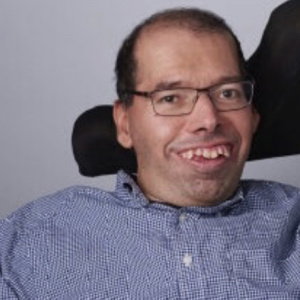
George Taleporos is concerned that the government’s verification systems do not consider accessibility and equity for Australia’s disability community.
pdapressreleaseidsystemsmay2026
Funded through their Dr Jennifer Fitzgerald Research Grant, a grant of up to $30,000 is available to support researchers with disability to conduct research that aims to improve the lives of people living with disability.
The grant is offered in recognition of Dr Jennifer Fitzgerald AM, Chief Executive Officer of Scope from 2012 until 2022 and champion for people with disability and their families.
Established to recognise her significant contribution to Scope and the disability sector, this backing also highlights her ongoing commitment to research and evidence-based practice.
Applications for the 2026 grant are now open to early-career researchers who completed their PhD up to five years ago (excluding career disruptions) and are employed at an Australian university or other setting, such as a community service organisation.
The grant is for a 1–2 year research project that aligns with Scope’s research priority areas. Funds can be used to support a new project or an existing project where there is a funding gap.
For information on how to apply, and to explore past grant recipients, go to:
If you have any questions, please contact Dr Caroline Hart at chart@scopeaust.org.au.
Applications close on Friday 12 June 2026.
Physical Disability Australia is calling for urgent action to fix inaccessible charging infrastructure before inequality is further embedded into the nation’s transport system.
As petrol prices climb and fuel security becomes more volatile, Australia’s move to electric vehicles is accelerating. But for many people with disability, the nation’s EV charging network remains inaccessible, unreliable, and unequal.
The recent Austroads’ “Enabling Accessible Electric Vehicle Charging” report confirms what drivers with disability already know: accessible charging is still not being treated as essential. A “minimum bays” approach may meet basic requirements on paper, but in practice it leaves people with disabilities facing longer waits, fewer options, and greater uncertainty every time they need to recharge.
Physical Disability Australia says that must change.
“If Australia is serious about an electric future, it must be a future that includes everyone,” said Suzanne Gearing, CEO of Physical Disability Australia. “Accessible charging cannot be an afterthought. It is essential infrastructure. When disabled drivers are forced to rely on one bay being available, and not misused, that is not equality. It is exclusion by design.”
Physical Disability Australia is calling on governments, councils, developers, and charging operators to adopt an equity-first approach by making universal design the standard, retrofitting existing sites, and introducing enforceable measures to protect access.
“This is a chance to build the right system from the start,” Ms Gearing said. “We need leadership, urgency, and a commitment to dignity, safety, and equal access. This innovation will, like the curb cut, become a welcome addition to recharging stations, and benefit not just to people with disability, but a significant portion of the community.”
As Australia builds the transport network of the future, accessibility must be built in, not bolted on.
https://newshub.medianet.com.au/2026/05/australias-ev-future-is-leaving-disabled-drivers-behind/
pdapressreleaseelectricvehiclesevmay2026
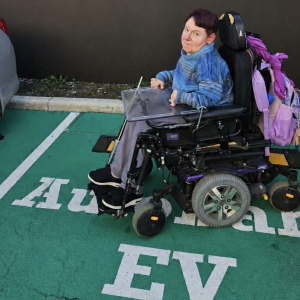
Melanie Hawkes, PDA’s WA Director, shares her frustration around accessibility of her local EV charging infrastructure.
There are a lot of benefits in becoming a PDA member.
With physical disability making up a huge *76.8% of Australia’s reported 5.5 million disabled, PDA represents the vast majority of our country’s disability community – over 4.2 million in fact.
As well as Australians living with physical disability, we also welcome their families, friends, carers, support workers, providers and anyone with a supportive interest as PDA members.
We’ve been around since 1995 and are one of a very small handful of Australian disability organisations that actually has members and board representation in every Australian state and territory.
This gives us a national footprint and allows PDA to have its finger firmly on the pulse of disability in our country.
It is through this representation that our strong voice is heard and that we are included in Australia’s disability conversation.
As an organisation run by people with physical disability for people with physical disability, PDA also truly understands and stands for the needs, rights and consideration of its members.
We put disability rights at the forefront of all that we do.
So, if you haven’t signed up for FREE PDA MEMBERSHIP yet, what’s stopping you?
Go to
Join today.
You’ll be glad that you did.
Bond University (in conjunction with Professor Michelle McLean -Editor-in-Chief, Ms Elmarie Stander, Assistant Professor Jaclyn Szkwara, Associate Professor Allan Stirling, Dr Priya Iyer, Associate Professor Tanisha Jowsey, Dr Thomas Titus and PDA’s Ambassador, Dinesh Palipana) has had an invaluable resource published to support and inform those affected by spinal cord injury.
Stemming from an initial idea by Dinesh Palipana and Thomas Titus to create ‘something’ that would be useful to everyone affected by and involved with spinal cord injury, this publication contains information, resources, research and most importantly, personal, lived experiences, in one place.
The direct link to the book is:
www.bond.studium.pub/life-well-lived-with-spinal-cord-injuries
The Queensland Government’s Department of Transport and Main Roads (TMR) is undertaking a review of the Disability Parking Permit Scheme to identify opportunities to improve safe access to community facilities and services.
TMR administers the Australian Disability Parking Permit Scheme (the Scheme) and is conducting a review of the Scheme to inform further changes and guide necessary improvements.
The goals of this review are to:
The review is considering topics such as the permit application process, eligibility criteria, and options to strengthen compliance and enforcement.
As part of this project, people utilising the Disability Parking Permit Scheme are invited to participate in an online survey.
You can find this by going to:
The survey does not automatically collect personal details (such as your name and email address) unless you provide it yourself.
This survey will close on 22 May 2026.
Feedback from this survey will ensure the scheme continues to assist people with a disability to access community facilities and services.
We understand just how overwhelming and stressful this period is for people with disabilities. Seeing the issue constantly highlighted in the news and across social media can make it feel even more intense and isolating.
At Physical Disability Australia we are acutely aware that this can be traumatizing, so we are being careful to ensure that we keep you updated with the facts, while we spend our energy being as involved as we possibly can in the process, keeping abreast of the facts and sharing them as soon as we can, making sure your voices are heard, and protecting your rights. At the moment it is like having a shadow in your room you can’t quite identify – every fibre in your body feels like you are being threatened, but you don’t know what that threat looks like, what it is capable of doing, or what you need to do to banish it. It may be as simple as moonlight making you aware of a chair that needs to be moved so you don’t fall over it, or as complex as a league of ogres that are just waiting for you to make the wrong move. In this particular circumstance it will be something in between.
Our goal is to learn about this threat, find what parts are going to benefit you and what parts pose a risk. Then we will ensure you are aware of both: give you the tools the use the benefits, and gather your stories as our weapon to overcome the risks. Through this, we will be walking with you – not in front of you so that you can’t see where you are going, not behind you where it is safer, but beside you, with roadmap in hand, to guide you through it.
The journey begins. This is the speech from Minister Butler [Minister Butler speech at the National Press Club – 22 April 2026 | Health, Disability and Ageing Ministers | Australian Government Department of Health, Disability and Ageing] and a fact sheet [Securing the NDIS for future generations | Australian Government Department of Health, Disability and Ageing].
PDA will be meeting with the Minister in two weeks to learn about the rollout plan, and we will be sharing those details with you. in the interim, we will shortly have a section on our website for you to share your thoughts so that we can ensure you are heard. The link will be posted here as soon as it is up.
Kind Regards,
Suzanne Gearing
CEO
At last night’s AGM, the PDA Board farewelled one of its most valued and dedicated members, Nick Schumi.
Nick took on the role of SA Director in April 2017 and, over the years, has made a lasting and meaningful contribution to Physical Disability Australia.
During his time on the Board, he played a key role in strengthening and elevating PDA’s reputation, recognition, and national presence.
We farewell Nick with deep gratitude and respect. He leaves the organisation in a strong position, having mentored Krystal Matthews, who now steps into the roles of SA Director and Vice President.
We have no doubt that Nick will continue to make a significant impact, both professionally and personally, within the disability sector and beyond.
We wish him every success in his future endeavours.
Thank you Nick.
We look forward to seeing what lies ahead for you.
Last night, we successfully held our deferred AGM, and we offer our sincere gratitude to the many members who chose to join us.
Following the meeting, elections were conducted for the Executive Board.
We are thrilled to announce the newly appointed PDA Executive Team, whose energy and vision promise to lead us forward with renewed enthusiasm:
Paul Williamson – President
Krystal Matthews – Vice President
Tammy Milne – Treasurer
This provides us with a robust and energised leadership team, equipped with the skills and dedication needed to guide our organisation through this pivotal period.
We are confident that, together, we will continue to protect the rights of people with physical disability and seize new opportunities to make lasting, positive change.
“You can now watch the speech online (https://www.youtube.com/watch?v=2VJa-mt-uTk) or read the transcript (Minister Butler speech at the National Press Club – 22 April 2026 | Health, Disability and Ageing Ministers | Australian Government Department of Health, Disability and Ageing)
The Minister spoke about the NDIS as one of Australia’s most important social programs and that it needs to be protected for people with permanent and significant disability.
As the NDIS is growing at a higher rate than expected and faster than any other similar programs, the long-term sustainability of the NDIS and its ability to support future generations, is at risk.
The Minister discussed the Australian Government’s plan to secure the future of the NDIS through 4 pillars:
The changes announced will not take effect until new legislation is introduced after the 2026-27 Budget.
It was also announced that, following consultation with people with disability and their families, carers and advocates, the rollout of new framework planning will be delayed until April 2027.
This will allow more time to listen to feedback, test proposed rules and processes, and share more detailed information about the transition.
In the meantime:
 1800 732 674


