Millions Face Financial Exclusion and Bureaucratic Nightmares as Mobility Barriers Turn Everyday Essentials into Impossible Hurdles
In a nation that prides itself on inclusivity, a hidden crisis is unfolding: Australians with physical disabilities who cannot drive or fly are being systematically excluded from opening bank accounts, accessing government services, and even verifying their identity. With a driver’s license or passport often unattainable due to mobility limitations, these individuals are trapped in a cycle of frustration and inequality, according to a new report from Physical Disability Australia due for public release on June 1st.
The report, titled Barriers Beyond Mobility: The ID Crisis for People with Disabilities, reveals that over 5.5 million Australians live with disabilities, many of whom cannot obtain standard photo IDs due to chronic pain, limited transport options, or geographic isolation.
This “ID gap” creates insurmountable obstacles in a digital-first world, where anti-money laundering laws demand rigorous verification for banking, and government portals like MyGov require in-person or travel-dependent setups.
“Imagine needing a bank account to receive your disability pension, but being unable to prove who you are because you can’t drive to a Service NSW centre or fly for a passport interview,” said Suzanne Gearing, CEO of Physical Disability Australia. “This isn’t just inconvenience, it’s discrimination. People with disabilities are being denied financial independence, access to Centrelink benefits, and even basic information, all because our systems weren’t built with them in mind.”
Key challenges highlighted in the report include:
The report calls for immediate action, including:
Disability advocate Dr George Taleporos shared his concerns, “People with disability are once again being shut out by government systems that are built around able-bodied assumptions. Requiring a passport or driver licence to access essential identity checks ignores the reality that many of us cannot drive, do not fly, or do not have those documents. This is not a minor administrative problem. It is a serious access and equity failure that affects all areas of our lives. The government must make this verification system accessible and inclusive to people with disability.”
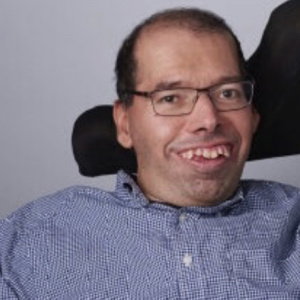
George Taleporos is concerned that the government’s verification systems do not consider accessibility and equity for Australia’s disability community.
pdapressreleaseidsystemsmay2026
Physical Disability Australia is calling for urgent action to fix inaccessible charging infrastructure before inequality is further embedded into the nation’s transport system.
As petrol prices climb and fuel security becomes more volatile, Australia’s move to electric vehicles is accelerating. But for many people with disability, the nation’s EV charging network remains inaccessible, unreliable, and unequal.
The recent Austroads’ “Enabling Accessible Electric Vehicle Charging” report confirms what drivers with disability already know: accessible charging is still not being treated as essential. A “minimum bays” approach may meet basic requirements on paper, but in practice it leaves people with disabilities facing longer waits, fewer options, and greater uncertainty every time they need to recharge.
Physical Disability Australia says that must change.
“If Australia is serious about an electric future, it must be a future that includes everyone,” said Suzanne Gearing, CEO of Physical Disability Australia. “Accessible charging cannot be an afterthought. It is essential infrastructure. When disabled drivers are forced to rely on one bay being available, and not misused, that is not equality. It is exclusion by design.”
Physical Disability Australia is calling on governments, councils, developers, and charging operators to adopt an equity-first approach by making universal design the standard, retrofitting existing sites, and introducing enforceable measures to protect access.
“This is a chance to build the right system from the start,” Ms Gearing said. “We need leadership, urgency, and a commitment to dignity, safety, and equal access. This innovation will, like the curb cut, become a welcome addition to recharging stations, and benefit not just to people with disability, but a significant portion of the community.”
As Australia builds the transport network of the future, accessibility must be built in, not bolted on.
https://newshub.medianet.com.au/2026/05/australias-ev-future-is-leaving-disabled-drivers-behind/
pdapressreleaseelectricvehiclesevmay2026
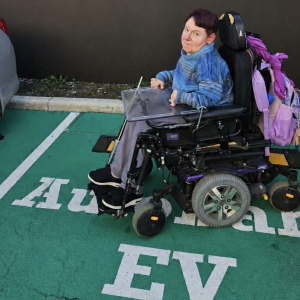
Melanie Hawkes, PDA’s WA Director, shares her frustration around accessibility of her local EV charging infrastructure.
Physical Disability Australia has chosen not to contribute separately to the commentary at this stage, recognising that there is already much information to digest. We are aligned with the comments made by the disability organisations we work closely with, and as an overview direct your attention to the government resource found here:
https://www.health.gov.au/resources/publications/securing-the-ndis-for-future-generations
Today, we will join several other peak organisations to meet with Ministers Butler and McAllister to gain insights into how they envision this process rolling out. Our focus will be on ensuring that the voices of people with disabilities are heard and on collaborating with government to uphold their rights.
Once we have a clearer understanding of the transition and its impact, we will issue a statement to share this information. Additionally, we will establish a process for people with disability to share their concerns and stories with us, ensuring that their voices are represented throughout this process.
We will work closely with the government and other disability peak organisations to ensure your voice is heard, sharing fact-based information as it becomes available, and working tirelessly to protect your rights. For those interested in staying up to date on our activities, we will be sending out regular updates to our membership.
You can apply for membership here: https://www.pda.org.au/membership-application/.
As part of PDA’s 30th year celebrations, a new look was commissioned for both our logo and a refresh of our website to meet our needs and strengthen our organisation as we move forwards.
Working with our project partners, FivebyFive, over the past eight months, we are now proud to officially launch the new website and our new logo. The creation of the website has been a collaboration in design, concept and structure with the new site having a fresh, exciting new look that is both informative and accessible.
In recognition of PDA’s heritage logo, the new PDA logo uses the traditional purple associated with disability and combines with a vibrant and fresh green to denote growth and moving forwards. The image with its soft curves demonstrates activity and movement with conviction and flow. The person like image in purple deliberately spreads and reaches across the green of Australia, with the curves indicating physical movement and presence. ‘Physical Disability’ is emboldened to clearly indicate who we are, our strength and our courage.
This logo was chosen as it positively reflects PDA as a truly national organisation with coverage across the entire country.
Armed with 30 years of history as a leading force representing Australians living with physical disability, PDA looks toward a future that grows our organisation and improves the lives of our members and the wider disability community.
We invite you to visit our “new” website by going to www.pda.org.au.
Joint Statement by Disability Representative Organisations
Tuesday 3 February
Australia’s Disability Representative Organisations (DROs) acknowledge an
agreement has been reached between the Federal, State and Territory Governments
regarding hospital funding and disability supports, including the Thriving Kids
initiative, that will have implications for the supports people with disability have
access to across their lifespan and across Australia.
While Government announcements have focused on Thriving Kids, the bigger issue
is whether governments are prepared to deliver a functional, nationally consistent
Foundational Supports system (including Thriving Kids) that works alongside the
National Disability Insurance Scheme (NDIS) and Thriving Kids. These reforms
are required in parallel so people with disability can access support outside
the NDIS and avoid growing service gaps and inequity in different jurisdictions.
While the short delay to the commencement of the Thriving Kids rollout to October
2026 is cautiously welcomed, we emphasise the critical need for all levels of
Government to use this time wisely. The disability sector has consistently called for
sufficient time to enable genuine co-design across all jurisdictions, development of
strong safeguards, workforce planning, and appropriate piloting and testing prior to
large-scale implementation. This delay must be used to strengthen readiness and
address known gaps in the program.
This is consistent with feedback from families, educators and health professionals,
including responses gathered through national surveys conducted by Children and
Young People with Disability Australia and the Australian Autism Alliance,
which indicate that key parts of the system are not yet ready for transition at scale.
This concern has also been reflected in prior inquiry and reform processes, where
people with disability and their families have consistently called for greater
safeguards, clarity and accountability in system reform.
National Cabinet has agreed to Thriving Kids being fully operational by 1 January
2028, with $2bn being contributed by the Commonwealth, matched by states and
territories. DROs understand the importance of ensuring states and territories can
operationalise supports according to local contexts, but are concerned that without
any details on whether governments will publish an implementation plan, national
standards or undertake public reporting on progress over the next two years, families
will continue to experience the same uncertainty about what supports will be
available and when.
Disability Representative Organisations emphasise that last week’s agreement sits in
the context of ongoing negotiations and reforms that are not just about Thriving Kids.
They will determine how broader Foundational Supports and the NDIS work together
to deliver disability supports across the lifespan. There remains significant
uncertainty about how General and Targeted Supports will be funded, delivered and
governed across jurisdictions. With responsibilities split between the Commonwealth
and states and territories, clear and transparent intergovernmental agreements are
essential, alongside public clarity about how these systems will interact and what
pathways will exist as people’s needs change over time.
Disability Representative Organisations are calling on all governments to commit to a
nationally consistent Foundational Supports framework, underpinned by minimum
service standards, transparent intergovernmental agreements, robust oversight and
accountability mechanisms and clear public implementation plans and reporting.
Without these commitments, people with disability and families risk facing
fragmented systems, inconsistent access and widening service gaps.
Governments must also commit to national safeguarding mechanisms that interact
with all Foundational Supports, including Thriving Kids. These mechanisms
must embed crisis-response and escalation pathways, including clear referral
mechanisms, rapid review processes and coordination with health,
mental health and community services, so those experiencing acute stress or system
breakdown can access timely, wraparound support without falling between programs
or jurisdictions.
These reforms extend well beyond a single program. They will shape how children,
families and people with disability access supports across health, education and
community systems nationally, and how Foundational Supports interact with the
NDIS over time. The decisions made about Thriving Kids now will have long-term
consequences for equity, access and outcomes.
At the same time, NDIS planning reforms are progressing under the
New Framework Planning. This makes sequencing critical. Foundational Supports
must be operational, accessible and adequately resourced before any changes shift
support boundaries between systems. No person with disability should lose access
to support or be redirected into community systems that are not yet ready to meet
demand. This is particularly important for children, who may experience changes to
NDIS eligibility criteria from mid-2027 onwards.
Communities experiencing intersecting disadvantage are particularly vulnerable
during system transitions. Families who already face barriers navigating current
systems due to language, cultural background, disability type, geographic location,
or other intersecting factors will be most at risk when support boundaries shift.
Redirecting these families to community systems without addressing existing access
barriers will compound inequity and risk leaving children and families without
essential supports.
If these reforms are not properly designed and funded, the impacts will not be
contained within the disability sector. Pressure will shift to hospitals and emergency
departments, schools managing unmet support needs, and health and aged care
systems responding to issues that should be addressed earlier through appropriate
community-based disability supports.
Call to action
Disability Representative Organisations call on all governments to urgently commit to
the following actions:
Workforce training must build capability to work effectively across diversity, including
cultural competency, gender-responsive practice, disability-affirming approaches for
all disability types, and understanding how intersecting identities shape support
needs.
Disability Representative Organisations have reached out to the government to get
further direct clarity and remain ready to work constructively with governments to
ensure reforms are co-designed with people with disability, children and families,
strengthen coordination across systems, and deliver real, lasting improvements in
access to disability supports across the lifespan and across Australia.
The following organisations have contributed to and/or expressed their support for
this joint position statement:
Disability Representative Organisations acknowledge the passage of the Combatting Antisemitism,
Hate and Extremism (Criminal and Migration Laws) Bill 2026 (Cth) and the additional protections it
introduces to address serious forms of hate and extremism in Australia. The event of 14 December
2025 targeting the Jewish community at Bondi beach was an abhorrent act of hate and
antisemitism. Such acts have no place in our Australian community. Strengthening legal responses
to hatred and violence is an important part of improving social cohesion and community safety.
However, the Bill does not deliver comprehensive protection for minority groups, including people
with disability and the LGBTQIA+ communities. While it strengthens responses to serious
extremism and hate-motivated conduct, it does not introduce a federal criminal offence for serious
vilification. Instead, at the federal level, criminal liability remains largely limited to speech that urges
or threatens the use of force or violence against targeted groups. As Disability Representative
Organisations have consistently argued, including through previous submissions, this threshold is
too high and does not reflect the serious psychological and community harm caused by serious
vilification that falls short of urging or threatening violence.
We note that the Bill introduces aggravated sentencing provisions for hate-motivated offending.
While we welcome recognition that crimes motivated by hatred warrant stronger sentencing
responses, we are disappointed that people with disability and LGBTIQA+ communities were
excluded from these provisions. We are also disappointed that amendments which would have
extended aggravated sentencing to additional targeted groups were not adopted. This outcome
perpetuates gaps in Australia’s hate crime laws and results in unequal treatment of communities
experiencing forms of identity-based harm.
Disability Representative Organisations are concerned that Australia’s hate speech and vilification
laws, taken together across jurisdictions, continue to fall short for people with disability.
Protections remain inconsistent, and people with disability are not reliably or explicitly covered
across legislative frameworks. Hate speech reform is therefore not finished business. To achieve
social cohesion, hate speech and vilification laws must operate within a comprehensive, consistent
and rights-based legal framework that provides equivalent protection across protected attributes,
including people with disability.
Further reform is necessary to address gaps in Australia’s hate speech and vilification framework
affecting people with disability, LGBTQIA+ communities and the settings in which our communities
experience identity-based hatred. This includes congregate environments such as group homes,
aged care facilities and other institutional settings, where harm is often underreported and
insufficiently addressed under our existing laws. We urge Parliament to commit to this next stage
of reform and to meaningful co-design with affected communities.
We acknowledge strong safeguards must sit alongside any expansion of hate and extremism laws.
These safeguards are essential to protect procedural fairness, democratic participation and human
rights. This includes ensuring laws do not unintentionally restrict peaceful protest, non-violent
resistance, political expression or community advocacy, and that enforcement powers are applied
proportionately and transparently with independent oversight.
We also acknowledge the need for protections for people with disability who may be subject to
criminal justice processes. A recent case in Victoria highlighted failures in the conduct of law
enforcement when engaging with a young person with disability who was charged with terrorism
offences. This demonstrates the pressing need for safeguards that ensure people with disability are
treated fairly and safely by law enforcement and met with support, not punishment, when harm
arises from unmet needs or systemic barriers.
The signatories to this statement are united in our readiness to participate in a genuine, meaningful
co-design process with government and Parliament to progress the next stage of reform. The
Disability Royal Commission laid bare the scale and severity of violence, abuse, neglect and
exploitation experienced by people with disability, including identity-based harm in closed and
institutional settings. This harm continues to occur. Adequate legal protections and effective
recourse against identity-based harm are a necessity for people with disability.
We will continue to advocate for a Human Rights Act and reforms that uphold the human rights of
people with disability and strengthen Australia’s hate speech and vilification laws so they deliver
real protection in practice. People with disability have the right to live free from hatred and
vilification, and future reforms must reflect that fundamental principle.
Statement endorsed by:
November 6, 2025
We are deeply concerned by the schedule 5 amendment to the Social Security and Other Legislative Amendments (Technical Change No 2) Bill 2025 that gives police new powers to advise the government to stop a person’s Centrelink payment.
Stopping a person’s payment before any court process has occurred risks leaving people without income, housing or essentials, and undermines the presumption of innocence that underpins our justice system.
The Disability Royal Commission demonstrated that people with disability disproportionately experience high rates of contact with the criminal justice system, reflecting the broader criminalisation of disability and the lack of appropriate social, health and community supports. Commissioners also documented the significant barriers that our communities face when dealing with police, courts, and other parts of the justice system. These findings show that even within a system designed to uphold due process, people with disability are often denied justice when their rights and needs are not properly understood or accommodated.
We are also deeply concerned that communities traditionally over-policed and disadvantaged, including First Nations people with disability, would be at heightened risk under this amendment.
Given such injustices already occur for our communities under judicial oversight, the risks are far greater in an administrative system where decisions can be made quickly, without due process, evidence, legal representation, or advocacy.
This amendment was introduced without public consultation or adequate scrutiny. Changes that affect millions of Australians should be transparent and informed by those most impacted.
DROs strongly support the calls made by multiple civil society organisations, including the joint statement from Australian Council of Social Services (ACOSS) and Economic Justice Australia, for the Federal Government to abandon schedule 5 of this Bill.
This statement is endorsed by:
Physical Disability Australia is deeply concerned with recent changes made by South Australia’s Access Taxis and their new policy to remove customers’ abilities to request specific drivers.
Our understanding behind this policy change is related to a lack of Access Cab drivers on the road when needed and a desire to share the load to ensure drivers have more reason to be working. However, we believe that this approach removes the choice and control of the person utilising the taxi service. It is an understandable fact that people utilise regular drivers because of a built rapport, trust and feelings of safety.
We believe that this situation reached a critical point when 11-year-old Oliver Sandy and his mum Jodie were left stranded and subsequently missed an important medical appointment at an Adelaide Hospital due to a lack of Access Taxis on the road, despite booking in advance.
Concerning feedback has been shared from within our community about how these changes have negatively impacted the lives of people with disabilities. Many disabled people feel less safe using taxi services due to the lack of choice and uncertainty about drivers. This apprehension has led to reduced willingness to access the community, attend events, or go to medical appointments. These reforms have contributed to increasing social isolation among disabled individuals, as the new system does not adequately account for their need for reliable and familiar transportation support.
To our knowledge, there was no consultation process offered to the users of Access Taxis or their drivers preceding this policy change. It is our understanding that many Access Taxis drivers are also unhappy with this policy change as decent drivers who have regular customers are now losing work. Additionally, non-verbal participants and their families are no longer comfortable with not knowing who their driver will be or the quality of service they or their loved ones will receive. They feel as though they must take support workers with them when using Access Taxis as a safeguarding mechanism. We believe that if this approach is widely utilised, it will result in increased cost to the NDIS which is not a viable outcome.
We have written to The Hon Emily Bourke MP (SA Minister for Infrastructure and Transport) and are calling for stronger training and upskilling requirements for all drivers on disability awareness and safety practices to ensure a consistent standard of service delivery.
Further recommendations from PDA:
PDA’s CEO, Jeremy Muir, wants to see the South Australian Government, Access Taxis and those actually utilising disability transport work together to truly address the issues impacting safe, reliable and trusted service provision for the disability community. “People living with disabilities reliant on Access Taxis for inclusion and participation are sick and tired of being seen as second class citizens when it comes to accessible transport. Involving people with disabilities in both the conversation and problem solving will help to ensure that a fair and balanced outcome is achieved and that the safety and wellbeing of those accessing disability transport services are viewed as the priority.”
Aboriginal and Torres Strait Islander readers are advised this release contains names and references to people who have died.
New court filing has exposed a pattern of fatal restraints for First Nations people with disability that has been hidden.
This information surfaced after court documents revealed a young Aboriginal man died of acute respiratory failure, the result of being held in a bear hug with a knee to his back whilst in the care of registered NDIS provider Life Without Barriers in Alice Springs.
FPDN’s statement tells of the devastating pattern of preventable deaths, and sets out Non-Negotiable Demands for Immediate Action.
“ ‘FPDN asks all allies to elevate the voice of Mob in recognising that too many First Nations people with disability are on a predictable pathway to premature death, created by catastrophic and intersecting failures across Australia’s disability, guardianship, and justice systems.’ “
JOINT STATEMENT
Physical Disability Australia, in collaboration with other Disability Representative Organisations has released a Joint Statement in response to the Australian Government’s recent surprise announcement around changes to the NDIS.
NDIS Minister Mark Butler’s speech on Wednesday came as a major surprise to the disability community and DROs.
Whilst we welcome the investment in supports for children with developmental delay and autism, together we call for further information on how this will be achieved in such a short timeline and how it will sit within the move to Foundational Supports.
To read the full statement, go to:
 1800 732 674


